When Amazon released the first Echo in 2014, it was a novelty: a cylindrical speaker that could play music, set timers, and answer trivia questions. Twelve years later, voice assistant technology has become infrastructure — embedded in speakers, displays, doorbells, thermostats, televisions, microwaves, and cars. The assistant has moved from one device on a shelf to every room in your home simultaneously.
And in 2026, two things happened that fundamentally changed the privacy equation: Amazon launched Alexa+, a generative AI upgrade that requires all voice data to go to the cloud — eliminating the last local processing option users had. And Google was caught still harvesting sensor data from Nest devices it officially discontinued years ago.
If you have a voice assistant in your home — and statistically, you almost certainly do — here’s what it’s doing, what changed this year, and what you can realistically do about it.
The Landscape in 2026: It’s Not Just a Speaker Anymore
The phrase “smart speaker” dramatically undersells what these devices have become. In 2026, voice assistant technology is distributed across your entire home:
| Device Category | Primary Players | What It Captures |
|---|---|---|
| Smart speakers | Echo, Google Nest Audio, HomePod | Voice, room audio, wake word monitoring |
| Smart displays | Echo Show, Nest Hub | Voice + video, facial recognition, daily routines |
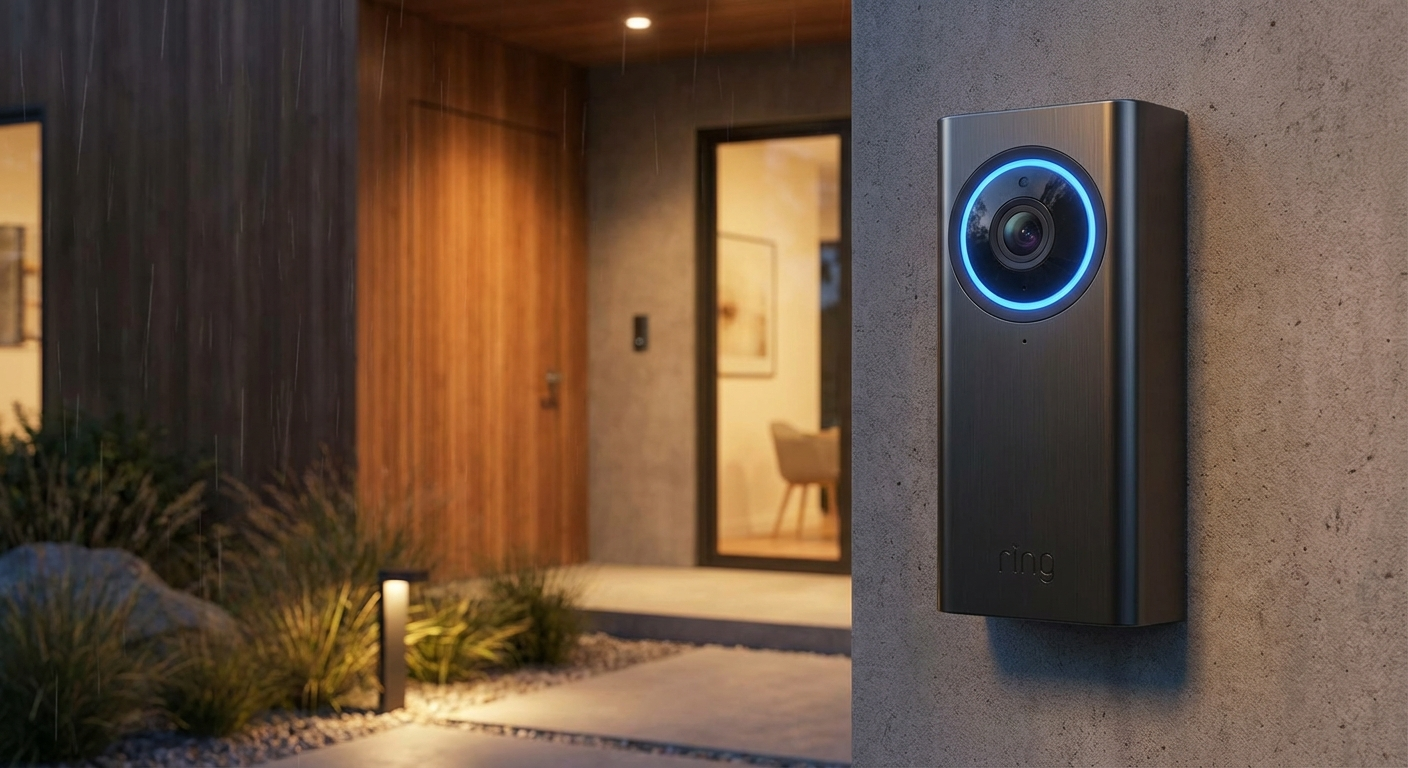
| Smart doorbells | Ring (Amazon), Nest Doorbell | Video, audio, visitor patterns, delivery data |
| Smart thermostats | Ecobee with Alexa, Nest Learning Thermostat | Occupancy, movement, sleep/wake schedules, temperature preferences |
| Smart TVs | Fire TV, Google TV | Viewing history, voice commands, room presence |
| In-car assistants | Alexa Auto, Google Assistant | Location, travel patterns, voice |
| Wearables | Echo Frames, Pixel Watch | Voice, location, biometric context |
The average home with “an Alexa” likely has Alexa in six or more separate devices. Google Home is similar. The microphone network in a modern connected home is not one device — it’s a distributed always-on sensor array that happens to also play Spotify.
What Changed in 2026: The Alexa+ Cloud Mandate
The biggest privacy development of 2025-2026 in voice assistants didn’t come from a breach or a regulation. It came from a product upgrade.
On March 28, 2025, Amazon removed the “Do Not Send Voice Recordings” option from select Echo devices, including the Echo Dot (4th Gen), Echo Show 10, and Echo Show 15. The feature had allowed audio commands to be processed locally on the device — meaning your voice never left your home. Amazon eliminated it to power Alexa+, its generative AI upgrade.
Alexa+ launched to all US customers in February 2026. For Prime members, it’s included. For everyone else, it’s $19.99/month. The upgrade is substantial:
- Full conversational AI: Alexa+ can carry multi-turn conversations, follow up, remember context, and handle complex requests
- Agentic capabilities: Integrations with Uber, OpenTable, Expedia, Ticketmaster, and dozens of services let Alexa take real-world actions on your behalf
- Personality customization: Three personality modes — Brief, Chill, and Sweet — launched in February 2026
- Ring AI integration: Alexa+ can now connect to Ring cameras as what Amazon calls a “personal home guard,” analyzing camera feeds with AI and notifying you of unusual activity
The AI capabilities are genuinely impressive. They’re also the reason Amazon decided every voice interaction must now be processed in Amazon’s cloud, with no local alternative.
What Amazon Replaced the Old Option With
Amazon didn’t leave users with nothing. They replaced the local processing option with “Don’t Save Recordings” — a setting that tells Amazon to delete voice recordings after processing rather than retaining them. The difference is significant:
| Old option (removed) | New option (available) |
|---|---|
| Audio processed on-device, never sent to Amazon | Audio sent to Amazon’s cloud, processed, then deleted |
| Nothing transmitted | Voice data transmitted — just not stored |
| Complete local privacy | Privacy depends on Amazon’s deletion practices and infrastructure security |
The new setting is better than nothing. It’s meaningfully different from the old option.
Google’s Discontinued Device Problem
In November 2025, security researcher Matt Metzger discovered something uncomfortable: Google is still harvesting data from first and second-generation Nest Learning Thermostats — devices that Google officially discontinued and cut off from smart features years ago.
The discontinued thermostats continue transmitting to Google’s servers:
- Temperature readings — when you adjust the heat
- Occupancy data — when the thermostat’s motion sensor detects presence
- Ambient light readings
- Motion detection events
These devices no longer receive security updates. They no longer support the smart features that were their primary value proposition. But they’re still beaming behavioral data about who’s home and when, the temperature preferences of the household, and daily occupancy patterns — straight to Google.
Google confirmed the data collection is occurring. The company hasn’t committed to stopping it.
This matters beyond one thermostat model. It establishes a pattern: connected devices can continue transmitting data long after their marketed useful life ends, long after users believe the relationship is over, and without any visible indication to the homeowner that data is still flowing.
The Fundamentals: What Voice Assistants Do All the Time
Before addressing what’s changed, it’s worth establishing the baseline of what these devices do continuously, by design:
The Wake Word Problem
Every Echo, Nest, and HomePod runs a local neural network called a wake word detector continuously — 24 hours a day. This model listens to all audio in the room and classifies each audio chunk as “wake word” or “not wake word.”
The design claim: audio that doesn’t contain the wake word is processed and discarded locally; only post-wake-word audio is transmitted to the cloud.
The practical reality: wake word detection is imperfect. These devices regularly false-trigger on similar sounds — “Election” for “Alexa,” “OK Boomer” for “OK Google.” When a false trigger occurs, several seconds of pre-trigger audio is captured and transmitted. Accidental recordings of private conversations are a documented, ongoing occurrence — not an edge case.
Human Review
In 2019, Bloomberg broke the story that Amazon employed thousands of human contractors worldwide to listen to and transcribe Alexa recordings. The reviewers heard music, shopping requests, conversations — and occasionally things far more sensitive. The stated purpose was improving accuracy. The program existed for years before it was publicly disclosed.
Amazon, Google, and Apple all subsequently acknowledged having human review programs and gave users the ability to opt out. The opt-out is not the default. If you’ve never explicitly opted out, you may still be subject to human review of your voice recordings.
To opt out:
- Alexa: Settings → Privacy → Manage Your Alexa Data → Help improve Alexa → toggle off
- Google Assistant: myactivity.google.com → Web & App Activity → manage settings
- Siri: Settings → Privacy & Security → Analytics & Improvements → Improve Siri & Dictation → off
Diagnostic Data Transmission
Beyond voice recordings, Echo and Google Nest devices transmit device telemetry continuously: device state, network information, usage patterns, feature usage frequency, error logs. Amazon’s privacy policy confirms this. The granularity of what’s transmitted vs. processed locally is not user-controllable.
Law Enforcement Access: Your Voice Assistant as Evidence
Voice recordings stored in Amazon’s and Google’s cloud infrastructure are subject to standard legal process — subpoenas, warrants, and court orders. Both companies publish transparency reports documenting law enforcement data requests, and both comply with valid legal process.
Voice recordings have been used as evidence in criminal prosecutions. A 2015 Arkansas murder case involving an Echo recording was one of the first high-profile examples; the pattern has continued.
The relevant privacy framework:
- Third-party doctrine: Under US law, data you voluntarily share with a third party (like Amazon or Google) generally has weaker Fourth Amendment protections than data on your own devices
- Stored Communications Act: Governs government access to cloud-stored communications; warrants required for content, subpoenas sufficient for metadata in many cases
- State wiretap laws: Expanding rapidly; a February 2025 federal court ruling in California (Ambriz v. Google, LLC) held that CIPA wiretap liability can extend to AI voice products
What this means practically: If a voice assistant captures a conversation relevant to a crime — yours or anyone else’s in the room — that recording may be legally accessible to law enforcement if it was transmitted to and stored by Amazon or Google.
The “Don’t Save Recordings” setting Amazon now offers is relevant here: if recordings are deleted after processing, there’s nothing to produce in response to a subpoena. But “deleted” in cloud systems is not always immediate or complete, and Amazon hasn’t published a detailed technical description of their deletion process.
The Ring-Alexa Fusion: A Home Surveillance Network
With Alexa+, Amazon has created something genuinely new: a unified AI layer that connects audio capture (Echo), video capture (Ring cameras), and agentic action capability in a single system.
The “personal home guard” framing Amazon uses for the Alexa+/Ring integration describes AI-powered analysis of camera feeds: detecting unusual activity, flagging delivery arrivals, monitoring the home while you’re away.
This is a convenience capability. It’s also, by architecture, a home surveillance system operated by a private company with:
- Cloud storage of video and audio
- AI analysis of behavioral patterns at your property
- Historical data retention
- Law enforcement data-sharing policies that Amazon publishes (and has been criticized for)
- Prior history of partnerships with local police departments for Ring footage requests
The Ring network, as of 2023, had become the largest private surveillance network in the United States. Alexa+ integrates voice AI into that existing infrastructure.
COPPA 2.0 and the Children’s Privacy Baseline
COPPA 2.0, effective October 2025, established a new federal baseline for devices used by children under 13:
- Voice recording must be disabled by default on devices marketed to or likely used by children under 13
- Enabling audio capture requires verified parental consent
- Voice data from children cannot be used for behavioral advertising under any circumstance
If you have children who use Echo or Google Nest devices, COPPA 2.0 strengthened their legal protections — but the compliance burden is on manufacturers, and the enforcement mechanism is still developing. Reviewing your device settings to ensure voice history is disabled or minimized for children using these devices remains best practice.
Practical Steps: What You Can Actually Do
You’re not going to get Amazon or Google to change their business model. But you can significantly reduce your exposure with specific settings changes and architectural choices.
Immediate Settings Changes
Amazon Alexa:
- Open the Alexa app → More → Settings → Privacy → Manage Your Alexa Data
- Set “Save recordings” to Don’t save recordings
- Under “Help improve Amazon services” → turn all off
- Review “Voice Purchasing” and disable if not needed
- Review third-party skill permissions regularly — revoke anything you don’t use
Google Assistant / Nest:
- Go to myactivity.google.com → Web & App Activity
- Turn off audio saving or set auto-delete to 3 months
- Under Activity controls → Voice & Audio Activity → pause
- Review Google Home app → Account → Privacy settings
Apple Siri:
- Settings → Privacy & Security → Analytics & Improvements → Improve Siri & Dictation → off
- Settings → Siri & Search → review per-app Siri permissions
Physical Controls
Every Echo and most Google Nest devices have a hardware microphone mute button — a physical switch that disconnects the microphone from the device’s processor. This is the only control you can fully trust, because it’s not software-mediated.
Use it when you’re having sensitive conversations near these devices. Make it a habit, not an exception.
Network Architecture
Put voice assistants on a dedicated IoT network segment isolated from your computers, phones, and NAS storage. If a voice device is compromised — or if you simply want to limit the behavioral data these companies can correlate — network isolation ensures the device can only reach the internet, not lateral devices on your home network.
Audit Your Device Count
Walk through your home and inventory every device with a microphone. Include:
- Smart TVs (most have voice assistant integration now)
- Game consoles
- Fitness equipment (many Peloton/NordicTrack devices have Alexa built in)
- Appliances (smart refrigerators, microwaves with Alexa)
- Cars connected to your home Wi-Fi
The number will likely surprise you. Decide which devices actually need voice assistant functionality enabled, and disable it on the ones that don’t.
The Bottom Line
Voice assistants in 2026 are capable, genuinely useful, and deeply embedded in daily home life. They’re also persistent sensors that transmit behavioral data about your household to private companies with their own retention policies, law enforcement disclosure practices, and commercial interests.
The decision to use them is yours to make — the convenience is real. But the era of treating these devices as neutral utilities is over. Alexa+ is now cloud-mandatory. Google harvests data from devices it discontinued. Human reviewers have listened to private conversations. Law enforcement has used recordings as evidence.
The smart approach isn’t to throw the Echo in the trash. It’s to configure it deliberately, understand what data flows where, use the mute button, and segment these devices from the rest of your network. Informed use is genuinely safer than ignorant use of the same hardware.
The voice in the room is listening. The question is how much you give it access to.
Sources
- TechCrunch: Alexa+, Amazon’s AI assistant, is now available to everyone in the US
- TechCrunch: Amazon’s Echo will send all voice recordings to the cloud starting March 28
- Malwarebytes: Amazon disables option to store Echo voice recordings on your device
- Technowize: Amazon Echo Privacy Update 2025: Local Data Processing Removed
- TechBuzz: Google Still Mining Data from Discontinued Nest Thermostats
- Goodwin Law: AI Voice Products Subject to California Invasion of Privacy Claims
- Brennan Center: Law Enforcement Access to Smart Devices
- Reclaim the Net: Alexa’s Privacy Backtrack — Amazon Pushes All Voice Data to the Cloud