Pasta sauce brand Prego has done something genuinely unexpected: they’ve made a piece of hardware.
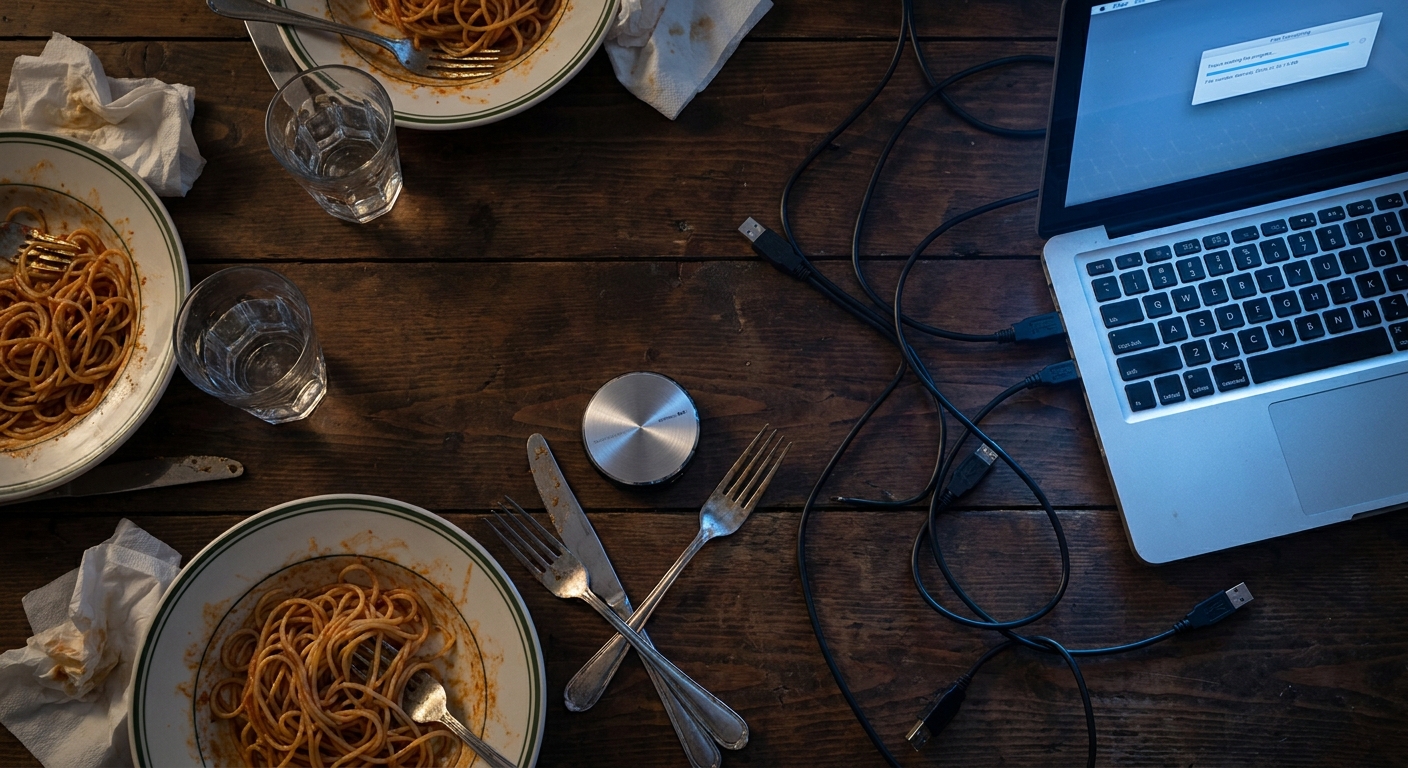
Launching April 27, 2026 for $20, the Prego Connection Keeper is a puck-shaped recording device designed to sit at your dinner table and capture family conversations. Built in partnership with nonprofit oral history organization StoryCorps, the device is framed as an antidote to the smartphone-hijacked dinner table — a simple, screenless gadget that records the stories, laughter, and banter of family mealtimes for preservation.
It’s a charming idea. And because this is SecureIoT.house, we’re going to look at exactly what you’re signing up for before you press that button.
What Is the Connection Keeper?
The device is deliberately low-tech in its physical design — described as resembling a premium caviar tin or, naturally, a pasta sauce lid. There’s no screen, no speaker, no Wi-Fi, no Bluetooth. It’s a recording device, full stop.
What’s in the box:
- One Connection Keeper recording device
- One jar of Prego pasta sauce
- Instruction manual
- Pack of conversation prompt cards (to spark discussion)
Hardware specs:
- Tap-to-record button — press when dinner starts, press when it ends
- 16GB microSD card (included) — stores up to 8 hours of audio
- USB-C port for charging and file transfers
- No wireless connectivity on the device itself
The absence of Wi-Fi and Bluetooth is the single most important privacy feature. The device cannot phone home. It cannot stream audio to a server in real time. It cannot be remotely accessed. Everything stays on the microSD card until you physically transfer it.
That’s a meaningful design choice and a genuinely better default than most consumer audio products.
How the StoryCorps Archive Works
StoryCorps is a nonprofit organization that has been recording and preserving oral histories since 2003. They operate recording booths across the United States and maintain a permanent archive — a portion of which is housed at the Library of Congress. They have real infrastructure and a real track record.
The Connection Keeper is designed to feed that archive from your kitchen table.
The upload flow:
- Record dinner conversation on the device
- Transfer the audio file via USB-C to your PC
- Upload to the StoryCorps portal, which opens May 4, 2026
- Choose privacy setting: private (only you), shared with specific people, or public
Public recordings become part of a special Prego Collection within the StoryCorps archive and are eligible for permanent preservation at the Library of Congress.
Private recordings stay in your StoryCorps account, accessible only to you — or whoever you share the link with.
The Privacy Questions Worth Asking
StoryCorps and Prego describe the portal as using “full encryption” and “user privacy controls.” That sounds reassuring. But tech reviewers and privacy observers have noted that the specifics are thin. Here’s what hasn’t been fully explained:
What does “full encryption” actually mean?
Encryption is not binary. “Encrypted” could mean:
- End-to-end encrypted — only you hold the keys; StoryCorps cannot access your audio even if they wanted to
- Encrypted in transit and at rest — your audio is protected from outside attackers, but StoryCorps staff can access it
- Encrypted at rest only — standard database-level encryption that protects against storage breaches but not internal access
These are very different privacy postures. StoryCorps hasn’t specified which applies.
Who has server access?
StoryCorps is a nonprofit, not a data broker — that’s a meaningful distinction. But nonprofits can still be acquired, merged, defunded, or compelled to produce records by law enforcement. The question of who has administrative access to uploaded audio files hasn’t been addressed in the launch materials.
What happens if StoryCorps shuts down or gets acquired?
StoryCorps has been operating for over 20 years, which gives it more credibility than most tech startups. But organizations do fail, get acquired, or change their data policies over time. What are your rights to retrieve or delete your recordings if the service changes hands? The launch materials don’t address this.
The consent problem
This is the most underreported issue with the Connection Keeper.
When you tap the button at dinner, everyone at the table is being recorded — including:
- Children (who cannot consent)
- Guests who may not know the device is present
- Family members who didn’t agree to have their voices archived
Recording a conversation without the knowledge and consent of all participants is illegal in many US states under two-party or all-party consent laws. California, Illinois, Florida, and several others require all parties to a conversation to consent to recording.
Prego and StoryCorps haven’t addressed how users should handle this. The device looks like a condiment jar — a dinner guest might reasonably not notice it recording.
Before you use this device: Tell everyone at the table it’s there and that you’re recording. Get explicit agreement before you press the button, especially if you’re in a multi-party consent state or if children are present.
The Offline-First Design Is Actually the Right Approach
It’s worth giving genuine credit where it’s due: the decision to make this device offline-only at the hardware level is the correct privacy-preserving choice for a recording device in someone’s home.
Compare this to the alternative: a Wi-Fi-connected smart speaker that records conversations. That device has:
- Always-on microphone potentially intercepting more than intended
- Real-time cloud processing of audio
- Vendor data retention policies
- Potential for remote access
The Connection Keeper has none of those attack surfaces. The microSD card is physically in your possession. Nothing is transmitted unless you actively choose to plug it in and upload. If you simply never upload, the recordings never leave your home.
For a $20 device from a pasta sauce brand, that’s a better privacy baseline than plenty of purpose-built “smart” audio products.
What We’d Want to Know Before Uploading
If you’re going to use the device and upload recordings, these are the questions worth getting answers to before you do:
- What is StoryCorps’s specific encryption model? End-to-end, or server-accessible?
- What is the data retention policy? Can you delete a recording permanently from their servers?
- What happens to your data on acquisition or shutdown?
- Does upload require account creation? If so, what personal information is collected?
- Are uploaded recordings used for training AI models? Common in consumer audio services; not addressed here.
- What is StoryCorps’s law enforcement disclosure policy?
StoryCorps has a strong 20-year track record of treating interview subjects with integrity. That matters. But “trustworthy organization” and “auditable privacy guarantees” aren’t the same thing.
Should You Buy It?
The device itself — as a standalone offline recorder — is a genuinely nice idea at $20. Offline audio recorder, decent storage, no wireless exposure, a physical artifact of family dinnertime. If you treat it as a local recorder and never upload, there’s essentially no IoT privacy risk.
The upload-to-archive component is where you’re extending trust to a third party. That trust may be well-placed — StoryCorps is a serious nonprofit with a real mission. But read their privacy policy before you upload. Understand what you’re sharing and with whom.
And regardless of what you decide: tell everyone at the table before you press record.
Sources
- HotHardware: Is Your Pasta Sauce Listening? Prego Debuts Recording Device for the Dinner Table
- Fast Company: Prego StoryCorps Connection Keeper — Library of Congress collab
- TechRadar: StoryCorps and Prego made this gadget to rescue your dinner convos
- The Shortcut: Prego pasta sauce wants to listen in on what’s being said around the dinner table
- Digital Trends: Prego put down the pasta and made a $20 device to record your family dinners
- HomesCrux: Prego Launches Puck-Shaped Recording Device for Dinner Table
- PR Newswire: Prego Partners with StoryCorps to Transform the Everyday Dinner into Cherished Family Memories