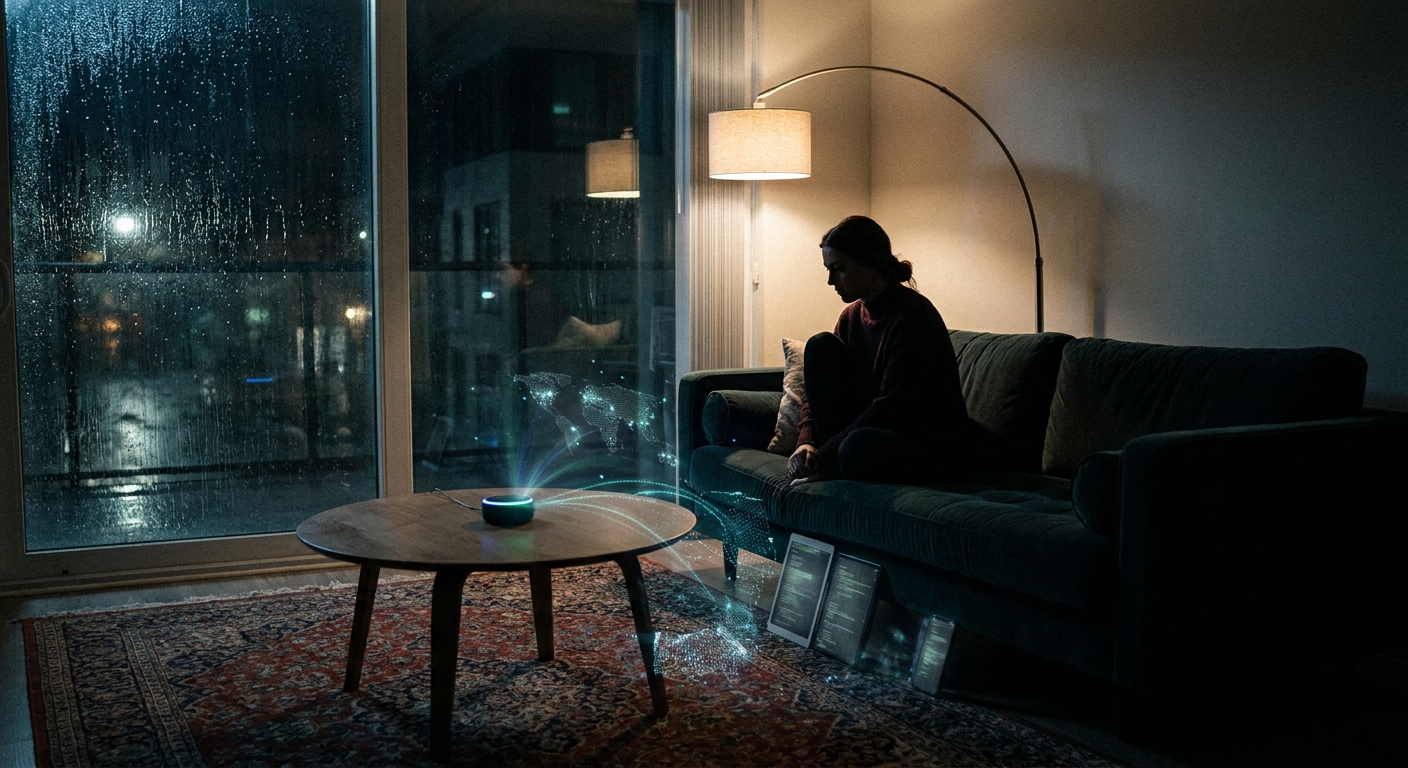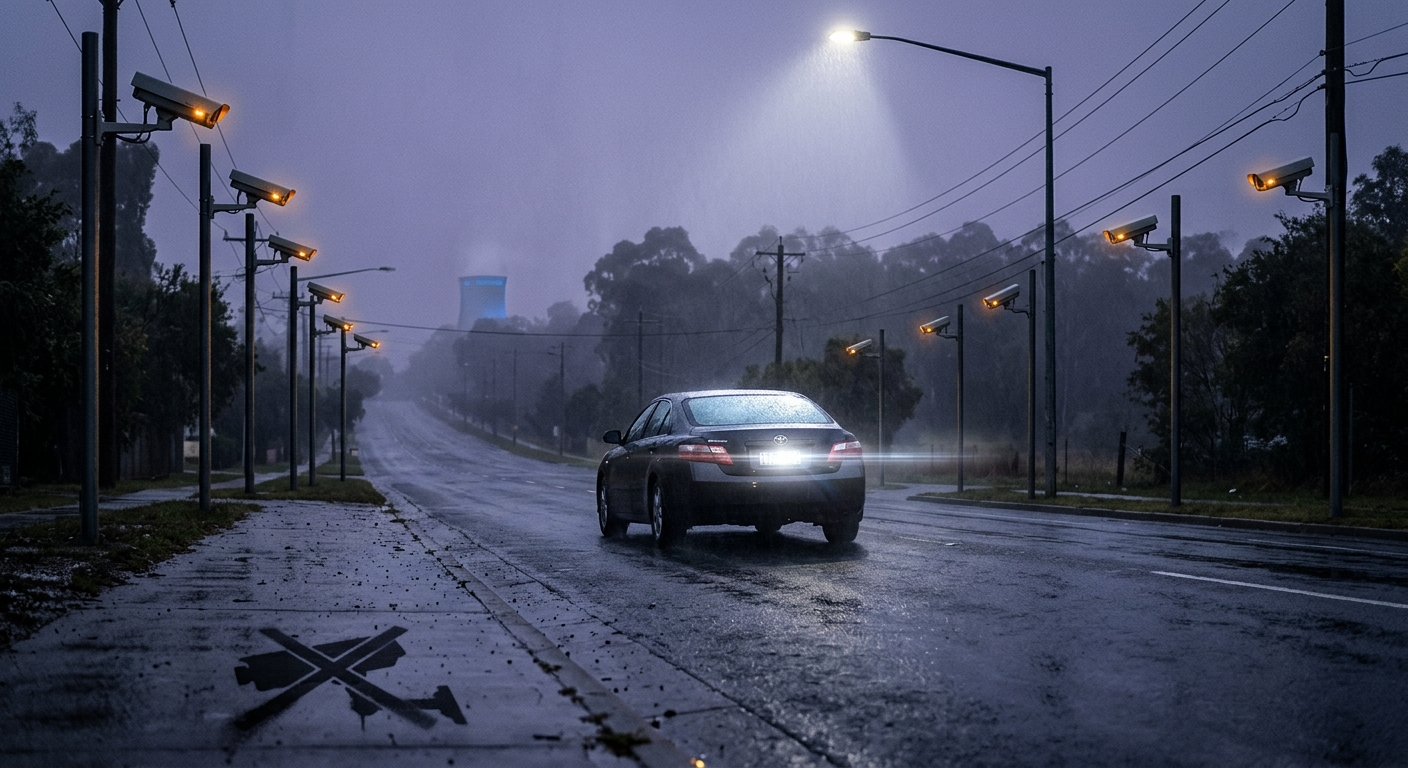
Somewhere between your house and the gym, a camera photographed your car. It logged the time, your plate, your vehicle’s make, model, and color. It noted the bumper sticker. Then it uploaded all of that to a private company’s cloud, where police in three other states — and quite possibly a federal immigration agent — can query it right now.
You didn’t consent. You weren’t notified. And it happened 20 billion times last month across the United States.
This is Flock Safety. And in 2026, a growing number of people have had enough.
What Flock Safety Actually Is
Flock Safety was founded in 2017 with a pitch that was hard to argue with: give neighborhoods a way to catch car thieves and package pirates with automated license plate reader cameras. Municipalities, HOAs, and police departments would install the cameras; Flock would handle the data; crime would go down.
The pitch worked. Today Flock operates in over 5,000 communities across 49 U.S. states, with approximately 80,000 cameras mapped by privacy researchers — performing over 20 billion vehicle scans per month. It is, by any measure, the largest private automated license plate reader (ALPR) network in American history.
The cameras don’t capture faces. Flock is careful to say that. What they capture is everything else about your vehicle: license plate, state, make, model, color, distinguishing features (dents, bumper stickers, bike racks, mismatched panels), and — critically — the precise time and location of every scan.
That last detail is the one that matters most. A single data point telling you a car was at a gas station tells you almost nothing. Twenty thousand data points telling you the same car visited the same gym at 6:30 AM on weekdays, picked up a child at an elementary school at 3:15 PM, visited a particular medical clinic twice in a month, and was parked outside a particular address every Friday night — that’s a behavioral profile. That’s a pattern of life.
Flock sells the infrastructure. The data stays in the database.
The Federal Pipe Nobody Authorized
Flock’s pitch to local agencies emphasizes local control: your cameras, your data, your jurisdiction. You set who can access your database. Want to restrict access to California-only agencies? Just flip the setting.
Except the setting didn’t work.
In February 2026, the Oxnard Police Department suspended all its Flock cameras after discovering that despite configuring the system to “California only,” a “vendor-based issue” had enabled a nationwide query feature through which federal agencies could search their data without Oxnard’s knowledge or approval.
The Ventura County Sheriff’s Office found similar unauthorized access — over 364,000 queries between February and March 2025, even though the “National Lookup” feature had been disabled since June 2023 to comply with California law.
The numbers from San Francisco were more staggering: a class action lawsuit filed in February 2026 alleged that Flock allowed out-of-state agencies to query the SFPD’s database more than 1.6 million times in a seven-month window between August 2024 and February 2025. The Los Altos database was accessed over a million times in 2024 and 2025 combined.
Federal agencies accessing those databases included ICE, CBP, FBI, and ATF — agencies that California’s sanctuary state laws explicitly prohibit local police from sharing ALPR data with.
The ICE Connection Flock Denied, Then Confirmed, Then Walked Back
Flock’s official position has been consistent: the company does not contract with DHS agencies, does not sell or share data with ICE, and has no relationship with immigration enforcement.
The reality, documented through public records and investigative reporting, is more complicated.
Flock conducted pilot programs with federal agencies including NCIS (January–April 2025), HSI — Homeland Security Investigations (March–May 2025), and CBP — U.S. Customs and Border Patrol (May–August 2025). In August 2025, Flock announced it would no longer conduct pilot projects with federal agencies. That announcement implicitly confirmed the pilots had existed.
Meanwhile, the unauthorized database access documented in California wasn’t a pilot program — it was law enforcement agencies from other states, and federal agencies, accessing local databases without any agreement in place. Police departments in Denver accessed Flock data for ICE- and immigration-related searches nearly 1,400 times between 2024 and 2025. Oregon law enforcement searched state networks on behalf of ICE hundreds of times in June 2025. As of October 2025, U.S. Border Patrol had access to at least ten Washington State police departments’ Flock databases with no explicit authorization documented.
In January 2026, Flock introduced a toggle allowing agencies to turn off all Federal Sharing. The existence of a toggle to turn something off confirms the feature existed by default.
The Palantir Layer
Flock doesn’t operate in isolation. Its data can be integrated with predictive policing platforms — most significantly, Palantir.
Palantir Technologies, Peter Thiel’s data analytics company, operates ImmigrationOS — a platform specifically designed to aggregate data streams for immigration enforcement. Palantir also sells predictive policing tools to law enforcement agencies across the United States. When Flock’s license plate scan data is fed into a Palantir platform, the result is what intelligence analysts call a “pattern of life analysis” — a detailed behavioral profile built from movement data.
Where you go, when you go, how often, who you go with — all of it inferrable from license plate data aggregated over time and correlated with other records in Palantir’s fusion databases.
The combination of Flock’s physical sensor network and Palantir’s analytical layer represents exactly the kind of comprehensive, infrastructure-level surveillance system that civil rights advocates have warned about for decades: built by private companies, purchased by local governments, marketed as crime-fighting tools, and quietly integrated into federal enforcement machinery.
The Colorado Sun, investigating whether Flock and Palantir share investors, found that both companies have ties to prominent venture capital networks — though the specific Thiel connection to Flock claimed in some social media accounts is contested.
The Free Trial Playbook
How did Flock get into 5,000 communities so quickly? Partly through a documented pattern of offering free trials to cities and HOAs, letting the network take root before contracts and public debate catch up.
A 2026 investigation found Flock systematically offering short-term free access to municipalities — getting cameras installed, demonstrating crime-solving value through the trial period, then presenting renewal contracts to city councils that faced political pressure not to remove a “proven” safety tool. By the time communities debated whether they wanted Flock cameras, the cameras were already there.
DeFlock: The American Resistance
The backlash has arrived.
DeFlock.me maintains a crowdsourced map of nearly 90,000 Flock and ALPR cameras across the United States, allowing anyone to locate cameras in their area. The site has become a hub for the anti-Flock movement, though the site’s organizers publicly state they do not advocate for destroying cameras.
Others have gone further.
Since April 2025, people across at least five states have cut down, smashed, or disabled Flock cameras. The documented incidents include:
- Eugene and Springfield, Oregon (October 2025): Six cameras cut down from poles
- La Mesa, California (February 2026): Two cameras destroyed — one smashed and left on the median, parts stripped from another — weeks after the city voted to continue its Flock contracts
- Greenview, Illinois (February 2026): Two cameras cut down, poles severed at the base
- Lisbon, Connecticut (February 2026): Camera smashed
- Suffolk, Virginia: One man faces 25 criminal charges for systematically destroying 13 cameras, which he says he did on Fourth Amendment grounds
- Oakland, California (April 2026): Multiple cameras paint-bombed with purple paint, including directly over lenses, making them inoperable
The Oakland paint-bombing, reported April 24, 2026, represents an evolution in tactics — disabling cameras without the risk of arrest that comes with more visible destruction.
Flock CEO Garrett Langley called the group behind DeFlock a “terroristic organization” in a recent interview. The irony of that framing — a surveillance company calling transparency advocates terrorists — was not lost on civil liberties observers.
The physics of the counterintelligence loop is also dark: police departments have used Flock’s own camera network to identify the vehicles of people who destroy Flock cameras.
This Has Happened Before — In Europe
The American resistance to Flock cameras is striking for its urgency and speed. But Europeans have been fighting surveillance cameras in the streets for decades, and the parallels are instructive.
France: 60% of Speed Cameras Destroyed
When France lowered speed limits on rural roads from 90 km/h to 80 km/h in 2018, the backlash was explosive. The Yellow Vest movement, already angry about fuel taxes and economic inequality, added speed cameras to its list of grievances.
By January 2019, protesters had vandalized or destroyed more than 60% of France’s speed camera network — approximately 3,200 cameras out of roughly 5,300. Methods included smashing lenses, painting over sensors, wrapping cameras in plastic bags, shooting them, and in the case of one group calling itself the Armed Revolutionary Nationalist Faction (F’NAR), blowing them up.
The cameras weren’t just seen as traffic enforcement — they were seen as a revenue collection mechanism that fell hardest on rural and working-class drivers who had no alternative to their cars. The surveillance felt punitive, not protective.
The vandalism never fully stopped. In 2025, the Eure-et-Loir department reported over 100 camera-damage incidents in a single year, with repair costs hitting €400,000. Up to 15% of France’s fixed speed cameras remain out of service at any given time.
London: The Blade Runners vs. ULEZ
In London, a group calling itself the Blade Runners has made it their mission to destroy every Ultra Low Emission Zone (ULEZ) camera in the city.
ULEZ cameras — installed to charge older, more polluting vehicles a daily fee for entering designated zones — expanded to cover all of London’s 32 boroughs in August 2023. The Blade Runners began targeting them almost immediately. Their methods: angle grinders, cable cutters, climbing to snap antennas, and occasionally fire.
By 2024, they had destroyed or disabled over 1,000 ULEZ cameras. The Metropolitan Police recorded 795 camera-related crimes between April and September 2024 alone — 200 stolen, 595 damaged. Video of oblivious police cars driving past Blade Runners actively cutting down cameras circulated widely online.
The Blade Runners frame their campaign as resistance to both an economic burden on low-income drivers and to the expansion of state surveillance infrastructure embedded in “environmental” schemes. The cameras don’t just log emissions violations — they log every vehicle that passes, whether they pay the charge or not.
New Zealand: The Pattern Goes Global
The trend has spread. In Auckland, speed cameras were cut down from poles in 2025 in incidents authorities attributed to a “global vandalism wave” — a pattern of camera destruction that maps onto resistance movements in France, the UK, and now the United States.
What These Movements Have in Common
The French Yellow Vests, the London Blade Runners, and the American DeFlock activists come from different political traditions and are angry about different things on the surface. But the through-line is consistent:
Surveillance infrastructure installed for one stated purpose gets used for others. Speed cameras catch speeders, yes — but they also build databases of who drove where and when, queryable by law enforcement for purposes unrelated to speeding. ULEZ cameras charge emissions fees, yes — but they also log every vehicle in the largest city in England. Flock cameras solve car thefts, yes — but they also build a national movement database that ICE, CBP, FBI, and ATF can query.
The cost falls unevenly. In Oak Park, Illinois, 84% of drivers flagged by Flock alerts were Black despite the town being only 21% Black. France’s rural working class couldn’t afford to avoid the roads where cameras sat. London’s Blade Runners argue ULEZ fees hit poor drivers who can’t afford newer vehicles hardest.
The consent was never asked for. No one voted for 80,000 Flock cameras performing 20 billion scans per month. No resident was asked whether they wanted their daily routine logged and made searchable by any police department in the country. The cameras arrived through HOA board votes, city council approvals, and free trial programs — below the threshold of public debate.
What You Can Do
Find the cameras near you. DeFlock.me maintains a public, crowdsourced map of ALPR cameras. Knowing where they are doesn’t require destroying them — it starts with awareness.
Check whether your city has a Flock contract. Many cities have approved these contracts without significant public debate. Public records requests can reveal what your jurisdiction has agreed to, what data-sharing is enabled, and whether federal access has been logged.
Support legal challenges. The class action lawsuits against Flock in California are the most direct legal challenge to the network’s data-sharing practices. Organizations like the ACLU and Electronic Frontier Foundation have been documenting ALPR abuses and supporting legislative pushback.
Contact your city council. Oregon passed a law in April 2026 regulating police use of license plate readers — the result of sustained advocacy. Legislative change is slower than a can of purple paint, but it’s more durable.
Understand the data retention. Flock’s policy states 30-day retention. Audits and lawsuits have revealed the gap between stated policy and actual practice. The data being collected about your movements has value — to law enforcement, to immigration authorities, to commercial data brokers, and to anyone else who can get access to it.
The surveillance state doesn’t arrive all at once. It arrives as a neighborhood safety tool, as a crime-solving utility, as a free trial. By the time the full picture is visible — 80,000 cameras, 20 billion scans, 1.6 million unauthorized federal searches — the infrastructure is already in place, the contracts are already signed, and the cameras are already watching.
Some people are painting over the lenses. Others are going to court. The question the movement is really asking is simpler: who decided your daily commute should be permanently on file, and who authorized the government to search it?