What Happened: The Crunchyroll Breach in Plain English
On approximately March 12, 2026, a threat actor gained access to Crunchyroll’s internal systems. They were inside for roughly 24 hours before Crunchyroll’s security team detected the intrusion and revoked access. In that window, the attacker claims to have exfiltrated approximately 100 GB of personally identifiable information from Crunchyroll’s customer analytics environment and ticketing system.
The breach didn’t start at Crunchyroll.
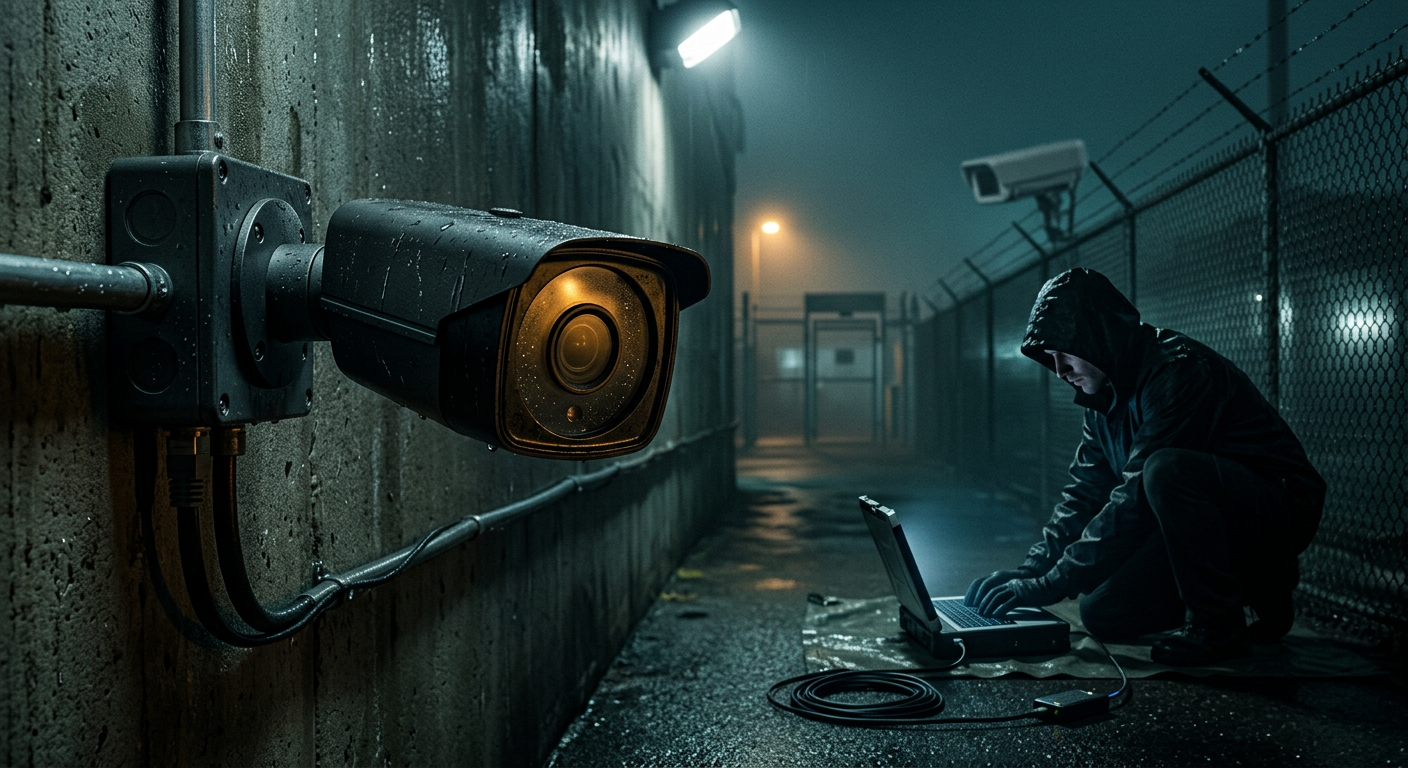
It started at Telus Digital — the business process outsourcing (BPO) company that handles customer support operations for Crunchyroll. A Telus Digital employee in India executed malware on their work workstation. That single infection became the doorway through which the attacker crossed from Telus’s environment into Crunchyroll’s internal systems.
This is a supply chain attack. The target was Crunchyroll. The entry point was a third-party contractor with legitimate access to Crunchyroll’s infrastructure. And it’s exactly the kind of attack that’s become the dominant threat vector for enterprise breaches in the past three years.
The breach was first reported by International Cyber Digest on March 22, 2026, after the threat actor reached out directly to provide evidence. Cyber Security News and GBHackers independently analyzed samples of the exfiltrated data and confirmed the presence of sensitive customer records.
Crunchyroll has not responded to media inquiries. It has not notified users. It has made no public statement.
The Data That Was Taken
Let’s be direct about what was exposed. According to threat actor claims corroborated by security researchers who analyzed data samples:
Confirmed Data Categories
IP Addresses Your IP address sounds technical and innocuous, but it’s not. Combined with other data points, it reveals your approximate location, your internet service provider, and can be used to build a behavioral profile — when you’re home, when you’re not, what devices you use.
Email Addresses The cornerstone of every phishing campaign ever run. With 100 GB of confirmed Crunchyroll subscriber emails, attackers have a ready-made target list for credential phishing, account takeover attempts, and social engineering. If your Crunchyroll email is the same one you use for banking or work, the exposure radius just grew considerably.
Credit Card Details This is the one that keeps people up at night. Security researchers confirmed that credit card data is present in the exfiltrated samples — but the full scope of what was taken remains unclear. Whether this includes full card numbers, truncated numbers, expiry dates, or CVVs has not been publicly confirmed. Under PCI DSS standards, full card numbers should never be stored in plaintext, but partial card data combined with other PII is still enough to enable targeted fraud. Treat this as a full card compromise until Crunchyroll says otherwise (which, at this rate, may be never).
Customer Analytics PII This is the big one people are sleeping on. Customer analytics data is a goldmine. It typically includes viewing history, device fingerprints, account creation metadata, subscription tier information, and behavioral data that platforms use for targeting and recommendations. This isn’t just your name and email — it’s a detailed profile of your digital behavior assembled by Sony’s data science team.
Ticketing System Data Crunchyroll’s support ticketing system contains some of the most sensitive PII a company holds: customer complaints, billing disputes, account recovery requests, and communications between support agents and users. Ticketing data often includes partial account credentials, previous addresses, and the kinds of personal details people only share when they have a problem. This data is extraordinarily useful for social engineering attacks.
Scale Assessment
One hundred gigabytes is not a small data theft. For context: a typical database export of 10 million user records with a moderate amount of metadata per record lands in the 5–15 GB range. A 100 GB exfiltration suggests either a massive subscriber base being affected, an extremely data-rich set per user, or both. Crunchyroll has over 100 million registered users worldwide and approximately 15 million paid subscribers. The exposure could be catastrophic in scope.
The Telus Digital Connection
To understand this breach, you need to understand Telus Digital’s role in the ecosystem.
Telus Digital is a subsidiary of the Canadian telecommunications giant Telus Corporation. It operates as a massive global BPO provider, handling customer experience services for major corporations across industries including tech, gaming, e-commerce, and streaming. Telus Digital employs tens of thousands of people worldwide, with significant operations in India, the Philippines, and Eastern Europe.
For Crunchyroll (owned by Sony’s Funimation/Crunchyroll consolidated entity), Telus Digital handles functions including:
- Customer support operations (the people who answer your tickets)
- Content moderation
- AI data operations (labeling, annotation, quality assurance)
- Back-office processing
This is a normal arrangement. Most large tech companies outsource some or all of these functions. The problem is structural: to do these jobs, BPO employees need authenticated access to the client’s internal systems. They need to log into ticketing platforms, customer databases, and support tools. They need to see your account data.
That legitimate access is exactly what the threat actor exploited.
The Telus Digital Incident of March 12, 2026
The Crunchyroll breach didn’t happen in isolation. March 12, 2026 was a bad day for Telus Digital clients across the board.
On that date, threat actors claimed to have compromised Telus Digital’s infrastructure and accessed data belonging to multiple client companies that rely on Telus for BPO services. The Crunchyroll incident is tied directly to this broader Telus Digital compromise — the same initial access, propagated outward to multiple enterprise targets simultaneously.
This is the defining characteristic of BPO supply chain attacks: one infection, many victims. When an attacker compromises a BPO provider, they don’t get one company’s data. They get a keys-to-the-kingdom scenario across every client whose systems that BPO accesses. The ROI for threat actors is extraordinary.
How BPO Supply Chain Attacks Work: The Technical Anatomy
This attack follows a well-established playbook. Understanding the mechanics matters — both for organizations evaluating their third-party risk posture and for users trying to understand how their data ended up somewhere it shouldn’t be.
Stage 1: Target Selection and Reconnaissance
The attacker doesn’t start with Crunchyroll. They start with a question: which BPO providers have access to high-value targets, and what’s the weakest employee endpoint I can compromise?
BPO companies are attractive for several reasons:
- High employee turnover means security awareness training is inconsistently applied
- Work-from-home and remote-work policies expand the endpoint attack surface dramatically
- Lower security investment than enterprise clients — BPO margins are thin, security budgets follow
- Outsourced IT support sometimes means slower patch cycles on worker endpoints
- Multi-tenant access means compromising one worker gets you into multiple client environments
The reconnaissance phase involves identifying BPO companies that service high-value targets (streaming platforms, financial institutions, healthcare companies), mapping their employee base via LinkedIn, and identifying phishing targets with the right access levels.
Stage 2: Initial Access — The Malware Execution
In the Crunchyroll case, a Telus Digital employee executed malware on their workstation. The phrase “executed malware” is significant — it implies the employee ran something. This points to one of the classic initial access vectors:
Phishing with malicious attachments: An email arrives appearing to be from HR, a client, or an internal system. The attachment is a weaponized document — a macro-laden Excel file, a PDF with embedded scripts, or a disguised executable. The employee opens it.
Trojanized software downloads: The employee downloads what appears to be a legitimate tool — a productivity app, a VPN client, a work utility — that’s been poisoned with a remote access trojan (RAT).
Job offer/freelance lure attacks: Increasingly common against BPO workers. A fake job listing or freelance project offer delivers a “skills test” or “work sample” that contains malware.
Malvertising or drive-by download: Less likely in a corporate context, but possible if the workstation is used for personal browsing or if security controls are weak.
Once executed, the malware establishes persistence on the workstation and begins communicating with the attacker’s command-and-control (C2) infrastructure. Common payloads used in this type of attack include:
- Information stealers (RedLine, Vidar, Raccoon) — immediately harvest stored credentials, browser cookies, and authentication tokens from the infected machine
- Remote Access Trojans (RATs) — give the attacker interactive control over the machine
- Cobalt Strike beacons — sophisticated post-exploitation framework used to stage further operations
Stage 3: Credential Harvesting
The most valuable thing on a BPO employee’s workstation isn’t files. It’s authentication tokens and saved credentials.
Modern enterprise access is often handled through:
- Single Sign-On (SSO) platforms (Okta, Azure AD, Google Workspace) with session tokens stored in browsers
- VPN credentials for accessing client networks
- Ticketing platform credentials (Zendesk, Salesforce Service Cloud, Freshdesk) for client support systems
- RDP or VDI credentials for virtual desktop access to client environments
Information stealers extract these in seconds. Browser-saved passwords, cached session cookies, VPN configuration files, locally-stored credential managers — all of it goes back to the attacker before the user has any idea something is wrong.
Stage 4: Lateral Movement into Crunchyroll’s Environment
With valid Telus Digital employee credentials for Crunchyroll’s ticketing and customer analytics systems, the attacker doesn’t need to “break in” to Crunchyroll’s network in the traditional sense. They log in with legitimate credentials. To Crunchyroll’s access logs, the initial connection looks like a normal support agent doing their job.
From that initial foothold, lateral movement techniques include:
Privilege escalation: Exploring what the compromised account can access, looking for misconfigured permissions, unused admin accounts, or shared service credentials that grant elevated access.
Ticket system pivoting: Customer support systems often have integrations with billing platforms, CRM databases, and customer analytics systems. An attacker with support agent access can often reach adjacent systems through legitimate integrations.
Session token replay: If the attacker stole an active SSO session token, they can replay that token from any IP address and appear as the legitimate user — bypassing VPN requirements and MFA in many configurations.
Internal reconnaissance: Once inside, automated tools map accessible systems, data stores, and APIs. The attacker identifies where the high-value data lives — in this case, the customer analytics environment and ticketing database.
Stage 5: Data Exfiltration
One hundred gigabytes of data doesn’t move itself instantaneously. Exfiltrating that volume requires planning.
Common exfiltration methods in this type of attack:
Cloud storage abuse: Staging data to legitimate cloud storage (Mega, Dropbox, Google Drive, rclone-supported targets) abusing the fact that outbound connections to these services often aren’t blocked or closely monitored.
Encrypted tunneling: Using DNS-over-HTTPS or HTTPS connections to exfiltrate data in ways that blend with normal web traffic.
Chunked transfers: Breaking the exfiltration into smaller pieces over time to avoid bandwidth-based anomaly detection.
In the Crunchyroll case, the attacker operated for approximately 24 hours before being detected. The fact that 100 GB moved in that window suggests either high-bandwidth exfiltration channels or pre-staged tooling ready to go the moment access was established. This wasn’t improvised. The attacker knew what they were after before they got in.
Stage 6: Crunchyroll Detects and Revokes Access
Crunchyroll’s security team did detect the intrusion — within 24 hours. Access was revoked. The attacker was kicked out.
But the data was already gone.
Detection after exfiltration is functionally equivalent to no detection at all, from the user’s perspective. The harm has already been done. The race was already lost the moment that Telus employee’s workstation was compromised.
Why Crunchyroll Is Saying Nothing
Eleven days after the breach. Zero public acknowledgment.
This isn’t oversight. This is a calculated legal strategy, and it’s worth understanding exactly why companies do this — and why it’s both understandable and completely unacceptable.
The Legal Liability Calculus
Data breach notification laws create liability. Once a company formally acknowledges a breach affecting user data, the clock starts ticking on:
- State-level breach notification requirements (all 50 US states have them, timelines vary from 30 to 90 days)
- GDPR notification requirements (72 hours for EU users, with substantial fines for non-compliance)
- CCPA obligations (California consumers have a private right of action for breaches of unencrypted personal information)
- FTC Act enforcement (failure to implement reasonable security is an unfair trade practice)
- SEC disclosure requirements (if material to investors)
Every hour of silence is an hour not on the clock. Every hour you’re “investigating” rather than “acknowledging” is an hour your legal team has to build the narrative, identify defenses, and limit the scope of what must be disclosed.
The Class-Action Context
Crunchyroll’s timing is particularly brutal. In early 2026, the company was already fighting a class-action lawsuit over unauthorized sharing of user viewing data with third-party marketing platforms. That’s not a settled matter — it’s ongoing litigation.
Acknowledging a simultaneous data breach involving credit card data and PII creates a compound liability situation that any corporate lawyer would move heaven and earth to minimize. The existing lawsuit establishes a pattern of alleged privacy violations. A confirmed second incident — this one involving a breach of financial data — would be catastrophic ammunition for plaintiff attorneys.
The strategy is to stay silent for as long as legally possible, complete a thorough forensic investigation, and then make the narrowest possible disclosure at the last legally defensible moment.
The BPO Shield
There’s another angle here: the breach didn’t originate inside Crunchyroll’s own infrastructure. It originated at Telus Digital.
This matters legally. Companies will attempt to shift liability to the BPO provider, arguing that Telus Digital failed to maintain adequate security of client access credentials. This argument has merit — it’s also deeply cynical, because the enterprise client has both the power and the contractual obligation to enforce security standards on its vendors.
The BPO shield argument is cold comfort for the 100 million registered users whose data is now at risk.
What The Law Actually Requires
Regardless of where the breach originated, Crunchyroll almost certainly has notification obligations right now. Under most state breach notification statutes, the triggering event is unauthorized access to unencrypted personal information of residents of that state — not a confirmed determination of harm, not a completed investigation, not a definitive attribution.
The California Consumer Privacy Act (CCPA) allows consumers to sue directly when unencrypted personal information is subject to unauthorized access. Credit card data and email addresses are explicitly covered categories.
GDPR requires notification to supervisory authorities within 72 hours of becoming aware of a breach. If the breach was March 12 and Crunchyroll became aware of it shortly after, that deadline passed before the story was even publicly reported.
Crunchyroll’s silence is not compliance. It’s a bet that they can keep the lid on long enough to manage the disclosure on their own terms.
What Affected Users Should Do Right Now
You don’t know for certain whether your data was in this breach. Crunchyroll won’t tell you. So assume it was, and act accordingly.
Immediate Actions (Do These Today)
1. Change Your Crunchyroll Password Change it now, even if you use a password manager. Use a strong, unique password that you don’t use anywhere else. Enable two-factor authentication on your account if it’s not already active.
2. Change Passwords on Any Account Using the Same Email If the email address associated with your Crunchyroll account is the same one you use for banking, email, social media, or work — change those passwords too. Attackers will credential-stuff every service they can find associated with your email address.
3. Monitor Your Credit Card Statements Check the card associated with your Crunchyroll account for any unauthorized transactions. Go back at least 30 days. Set up transaction alerts if your bank offers them. Even small test charges (attackers often test cards with $1-5 transactions before larger fraud) should be flagged.
4. Consider a New Card Number Call your bank or credit union and request a new card number for the card on file with Crunchyroll. Most issuers will do this without closing the account. You don’t need to report fraud — simply saying you’d like a new number due to a potential compromise is sufficient. It’s free, it takes five minutes, and it eliminates the card exposure entirely.
5. Enable Fraud Alerts or Credit Freezes Contact the three major credit bureaus (Equifax, Experian, TransUnion) and place either a fraud alert (free, requires creditors to verify your identity before opening new accounts) or a credit freeze (free since 2018, most effective protection against new account fraud). If your data was in this breach, your information is sufficient for someone to attempt to open accounts in your name.
Medium-Term Actions (This Week)
6. Watch for Phishing Emails The email addresses and personal data from this breach are exactly what attackers use to craft convincing phishing emails. Be extremely skeptical of any email claiming to be from Crunchyroll, Sony, or payment processors in the coming weeks and months. Legitimate companies will not ask for your password or payment information via email.
7. Check Have I Been Pwned Visit haveibeenpwned.com and enter your email address. This won’t immediately show the Crunchyroll breach (it takes time for breach data to surface and be indexed), but it will tell you about past exposures and help you identify accounts that need attention.
8. Review Crunchyroll Account Activity Log into your Crunchyroll account and review your active sessions and any recent account changes. If you see devices or locations you don’t recognize, revoke those sessions immediately and change your password again.
9. Consider Identity Theft Monitoring Services like Experian IdentityWorks, LifeLock, or the free tier of Credit Karma include monitoring that will alert you if your personal information appears on dark web marketplaces or is used to open new accounts. This breach is exactly the scenario these services are designed for.
10. Document Everything Keep records of any fraudulent charges, unusual account activity, or suspicious communications related to this breach. If you’re ultimately included in a class-action lawsuit (and given the legal context, that’s a real possibility), contemporaneous records of harm are valuable.
If You’re a Premium Subscriber
If you have a paid Crunchyroll subscription, your payment card data is at heightened risk. In addition to the steps above:
- Request a chargeback if you see any unauthorized charges on your statement
- Monitor for new accounts opened in your name using your email or address
- Watch your Crunchyroll account for unauthorized subscription changes or plan upgrades
The Bigger Picture: BPO Providers Are the New Perimeter
The Crunchyroll breach is not an anomaly. It’s an acceleration of a trend that’s been building for years.
The enterprise security model of the 2010s was built around perimeter defense: put a firewall around your stuff, trust everything inside, block everything outside. That model was already failing by 2020 as cloud adoption destroyed the concept of a network perimeter.
But there’s a second perimeter destruction that’s gotten less attention: the human perimeter collapse driven by outsourcing.
When a company outsources customer support, IT operations, HR processing, or data annotation to a BPO provider, they extend their trusted access zone to thousands of employees they didn’t hire, didn’t train on their security policies, and can’t directly monitor. Those employees sit on endpoints controlled by the BPO — endpoints that may have different patch levels, different endpoint detection tools (or none), different browsing policies, and different security awareness training programs.
The result: a company like Crunchyroll has a security team that manages their own infrastructure, but they have essentially zero control over the security posture of the employee workstations that have authenticated access to their systems.
The Scale of the Problem
This isn’t a niche concern. BPO is a $270 billion global industry. The Philippines, India, Colombia, and Eastern Europe collectively employ millions of workers providing customer support, back-office processing, and data services to Fortune 500 companies. Every single one of those workers with authenticated access to an enterprise system is a potential initial access vector.
Major BPO providers that hold access to enterprise systems include:
- Telus Digital (formerly Telus International) — 75,000+ employees globally
- Concentrix — 300,000+ employees globally
- Teleperformance — 500,000+ employees globally
- TaskUs — 45,000+ employees globally
- Alorica — 100,000+ employees globally
A single successful malware campaign against any of these companies’ employee workstations is effectively a campaign against every major client they serve.
Why This Attack Pattern Is So Effective
Legitimate credentials: The attacker uses real, valid credentials. Detection is much harder than spotting a brute-force attack or known malware signature.
Trusted network relationships: BPO providers have explicitly approved access to client systems. Traffic from their IP ranges may receive reduced scrutiny.
Diffuse accountability: When the breach originates at a third party, both the enterprise and the BPO have incentives to blame each other rather than take immediate transparent action.
Scale of access: One compromised BPO employee may have access to multiple client systems simultaneously. The attacker hits one target, lands on multiple.
Detection gaps: Enterprise security teams monitor their own infrastructure. They often have limited visibility into the endpoint security of BPO partner workstations.
What Enterprises Should Be Doing (But Often Aren’t)
The security industry has been shouting about third-party risk for a decade. The problem is that the economics of outsourcing create misaligned incentives: BPO providers compete on cost, not security; enterprise clients want cheap support, not expensive security requirements baked into vendor contracts.
The mature approach to BPO security includes:
Zero-trust access architecture: BPO employees should never have persistent network access to enterprise systems. Every session should be authenticated, authorized, and logged in real-time. VPN access to internal networks should be replaced with application-level access controls with fine-grained permissions.
Privileged Access Workstations (PAW): For BPO employees accessing sensitive enterprise systems, managed dedicated workstations with full endpoint detection and response (EDR) coverage, controlled by the enterprise rather than the BPO, represent the gold standard. If Crunchyroll had required Telus Digital agents to access support systems through enterprise-managed virtual desktops, the malware on the Telus workstation wouldn’t have been able to steal usable credentials.
Session recording and behavioral analytics: Every support session touching customer PII should be recorded and monitored for behavioral anomalies. Bulk data access, unusual query patterns, and off-hours activity are signals of compromise.
Just-in-time access: Rather than persistent credentials, BPO employees should receive time-limited, scope-limited access tokens for specific tasks. A Telus employee supporting Crunchyroll’s billing inquiries doesn’t need 24/7 access to the full customer analytics database.
Contractual security minimums with audit rights: Vendor contracts should mandate specific security controls (EDR deployment, patching SLAs, security awareness training, incident response notification timelines) and grant the enterprise client the right to audit compliance. Most BPO contracts don’t go this far.
Continuous vendor risk monitoring: Tools that continuously assess the external security posture of vendors — monitoring for exposed credentials on dark web marketplaces, unpatched services, leaked data — can provide early warning of compromised BPO infrastructure before it propagates to the enterprise.
The Legal Reckoning That’s Coming
Let’s be direct: Crunchyroll is almost certainly in violation of data breach notification laws right now.
The breach was March 12. It involved credit card data and personal information of a large number of users. Under California law (CCPA/CPRA), under GDPR, and under the patchwork of state notification laws covering the other 49 US states, the obligation to notify affected individuals typically triggers within 30–90 days of discovery — not 30–90 days after completing a forensic investigation, not after litigation risk assessment, not after PR preparation.
The existing class-action lawsuit regarding viewing data sharing establishes that Crunchyroll has a pattern of alleged privacy violations in the plaintiff attorneys’ framing. A second breach — this one involving financial data — will almost certainly be incorporated into that litigation and potentially spawn new litigation.
Sony, as Crunchyroll’s parent company, faces reputational and financial exposure here that dwarfs whatever short-term legal advantage they gain by staying silent.
The Precedent Problem
Every major breach that remains unacknowledged chips away at consumer trust in the entire ecosystem. When Crunchyroll eventually discloses (and they will have to, eventually), the months-long delay will be the story. It won’t be “Crunchyroll suffered a third-party breach” — it’ll be “Crunchyroll hid a breach affecting 100GB of your data for months.”
The playbook of strategic silence was more viable when breach reporting was slower and less public. In 2026, with threat actors routinely going directly to security journalists, that playbook collapses quickly. The story is already out. The silence just makes it worse.
What We Know vs. What We Don’t
It’s worth being precise about the state of evidence here.
Confirmed
- A threat actor claims to have exfiltrated ~100 GB of data from Crunchyroll’s systems
- The breach is alleged to have occurred on March 12, 2026
- Security researchers (International Cyber Digest) analyzed a sample of the data and confirmed the presence of IP addresses, email addresses, credit card details, and customer analytics PII
- The vector was a compromised Telus Digital employee workstation used for lateral movement
- Crunchyroll revoked access approximately 24 hours after initial breach
- Crunchyroll has made no public statement as of March 23, 2026
Unconfirmed / Requires More Information
- The exact number of affected users
- Whether credit card data includes full card numbers or only partial/tokenized data
- The full scope of what was taken and what systems were accessed
- Whether this was a ransomware group, a data broker operation, or a state-sponsored actor
- Crunchyroll’s awareness of the breach (though given the 24-hour detection window, they almost certainly knew within days of March 12)
- The specific Telus Digital employee role and access level that was exploited
What Crunchyroll Owes Its Users
An explanation. A timeline. Specifics about what data was taken. Guidance on what steps to take. Credit monitoring services. These are standard elements of responsible breach notification. So far, users have gotten none of them — and have had to learn about the breach from security journalists.
The Anime Community Deserves Better
Crunchyroll isn’t just a streaming service. For a significant portion of its user base — particularly younger users, international users with limited English-language streaming alternatives, and the dedicated anime community that made the platform what it is — Crunchyroll is a trusted platform they’ve been giving their money and data to for years.
Many of those users are in countries with limited consumer protection infrastructure. Many are younger and may not have the security awareness to recognize phishing emails or unusual credit card charges. The community of people affected by this breach deserves transparency — not corporate liability management.
The fact that Crunchyroll was already fighting a lawsuit over unauthorized data sharing when this breach occurred makes the silence worse, not better. Users who have been loyal subscribers for years have a right to know their data is out there.
Timeline Summary
| Date | Event |
|---|---|
| March 12, 2026 | Telus Digital employee executes malware on workstation; attacker gains foothold; lateral movement into Crunchyroll systems begins |
| March 12, 2026 | Broader Telus Digital compromise confirmed — multiple BPO clients affected simultaneously |
| March 12–13, 2026 | Attacker exfiltrates ~100 GB of data from Crunchyroll’s customer analytics environment and ticketing system |
| ~March 13, 2026 | Crunchyroll security team detects unauthorized access and revokes credentials |
| Early 2026 (ongoing) | Crunchyroll fighting class-action lawsuit over unauthorized sharing of user viewing data |
| March 22, 2026 | Threat actor contacts International Cyber Digest; breach publicly reported for first time |
| March 23, 2026 | Crunchyroll has made no public statement; security researchers confirm data samples |
FAQ: Common Questions After a Breach Like This
Q: How do I know if I’m affected? You don’t, definitively, until Crunchyroll discloses — which they haven’t done. Treat every Crunchyroll account as potentially affected and take the protective steps outlined above.
Q: Should I cancel my Crunchyroll subscription? That’s a personal decision. Canceling your subscription doesn’t remove your data from their systems and doesn’t protect data that’s already been exfiltrated. If you want to leave, do so — but recognize that the breach has already happened. The protective steps matter more than cancellation at this point.
Q: Can I sue Crunchyroll? Potentially. If you’re a California resident, the CCPA provides a private right of action for breaches involving certain categories of personal information, including credit card data. Attorneys are almost certainly already building class-action cases. Documenting any harm you experience (fraudulent charges, identity theft, phishing attempts you can link to this breach) strengthens any potential claim.
Q: Is my streaming password exposed? The confirmed data categories are IP addresses, email addresses, credit card details, and customer analytics PII. Crunchyroll passwords were not specifically mentioned in the confirmed exfiltrated data. However, change your password anyway — the email address alone is enough to launch credential stuffing attacks against your password if it appears in other breaches.
Q: Was this a ransomware attack? Unknown. The behavior described — exfiltration without public ransom demand, direct contact with journalists, sharing of data samples — is more consistent with a data theft/extortion operation or a data broker operation than traditional ransomware. But threat actor motivations aren’t fully established.
Q: What about users outside the US? EU users are covered by GDPR, which provides stronger notification rights and larger potential fines for non-compliance. UK users are covered by the UK GDPR. Crunchyroll’s obligations extend globally. The silence is problematic regardless of jurisdiction.
Bottom Line
The Crunchyroll breach is a case study in everything wrong with how enterprises manage third-party risk — and how they handle it when things go wrong.
A Telus Digital employee ran malware. An attacker pivoted through legitimate access into Crunchyroll’s systems. One hundred gigabytes of user data — including credit cards, email addresses, IPs, and detailed behavioral analytics — left the building in under 24 hours.
Crunchyroll knew. They fixed the immediate problem. Then they said nothing.
Eleven days later, you’re reading about your own data breach in a third-party security publication, not an email from the company that took your money.
This is the state of enterprise security in 2026: the weakest link isn’t always inside the building. It’s the laptop of a customer support agent in a BPO call center on the other side of the world, running software that shouldn’t be there, connected to systems that shouldn’t trust it.
The fix for this isn’t user awareness. It’s corporate accountability — both in how enterprises secure third-party access and in how they treat the people whose data they’re obligated to protect.
If Crunchyroll won’t say it: your data may be compromised. Act accordingly. Don’t wait for the email that may never come.
This article was written on March 23, 2026, based on reporting by International Cyber Digest, Cyber Security News, and GBHackers. Crunchyroll has not responded to requests for comment. This article will be updated if Crunchyroll issues a public statement.
If you’ve experienced fraud or identity theft you believe may be connected to this breach, report it to the FTC at identitytheft.gov and to your state attorney general’s office.